
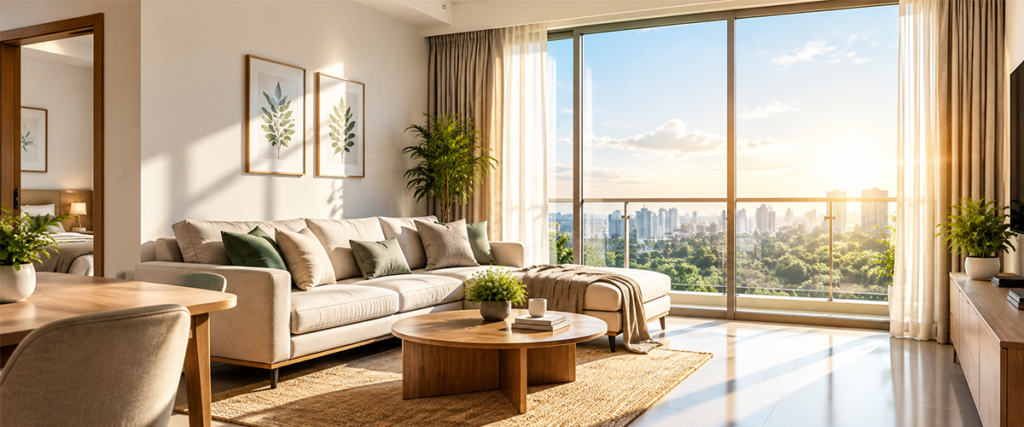
Natural light is one of the less obvious factors that can influence how comfortable a home feels. While buyers often focus on carpet area, room count and interior finishes, the amount of daylight entering an apartment can affect its visual character and everyday usability.
A home with good natural light can feel brighter and more welcoming during the day. It can also reduce the need for artificial lighting during daylight hours. For apartment buyers, therefore, understanding how sunlight enters different parts of a home can be an important part of evaluating everyday comfort.
Natural Light Can Make Interiors Feel More Welcoming
Daylight can significantly influence the atmosphere of an apartment.
Rooms that receive sufficient natural light can appear brighter and more open during the daytime. Sunlight can also highlight interior finishes, furniture and other elements of the home without relying entirely on artificial lighting.
This does not mean every room needs strong direct sunlight throughout the day. What matters is achieving a comfortable level of daylight appropriate to how each space is used.
Consider How Light Reaches Different Rooms
Not every room in an apartment will receive the same amount of daylight.
The living room may have different exposure from a bedroom, while the kitchen or passage areas may receive less direct light. When evaluating a home, consider how daylight reaches the spaces you use most frequently.
Look at the position and size of windows, the direction they face and whether nearby structures could restrict the amount of light entering the rooms.
Window Placement Makes a Difference
Windows are an important part of how daylight enters a home.
Larger openings can allow more light into suitable spaces, while the position of the window can influence how deeply daylight reaches a room. The surrounding buildings and orientation of the apartment also need to be considered.
Rather than judging a window only by its size, look at how effectively it illuminates the room during the day.
Think About Morning and Afternoon Sunlight
The timing of sunlight can influence how different rooms feel.
An east-facing opening may receive more morning sunlight, while other orientations can receive stronger light later in the day. The surrounding environment can also change the actual experience.
During a site visit, buyers can observe which rooms receive daylight and at approximately what time. This provides a more useful understanding than relying solely on the direction mentioned in a brochure.
Natural Light Can Complement Ventilation
Light and airflow are separate considerations, but they can work together to improve the indoor environment.
Windows and openings can provide both daylight and opportunities for natural airflow, depending on the apartment’s design and surrounding conditions. A home with thoughtfully positioned openings may therefore feel more comfortable during suitable weather.
However, buyers should evaluate ventilation separately rather than assuming that good daylight automatically means good airflow.
Avoid Blocking Available Daylight
The amount of daylight entering a home can also depend on how the interiors are arranged.
Large furniture pieces placed directly in front of windows can restrict light and make a room feel darker. Heavy curtains or excessive decorative elements can have a similar effect.
Keeping important openings reasonably clear can help make better use of the daylight already available.
Use Interior Finishes to Support Brightness
Interior choices can influence how daylight is distributed within a room.
Lighter walls and reflective surfaces can help spread available light, while darker finishes may absorb more of it. This does not mean that homes need to use only light colours.
A balanced combination of finishes can maintain character while allowing natural light to remain an important part of the interior environment.
Think About Each Room’s Purpose
Different rooms have different lighting requirements.
A living area may benefit from brighter daytime conditions, while a bedroom may need a more controlled environment for rest. A study or work area can also benefit from suitable daylight, particularly for people who spend considerable time at home.
Thinking about the purpose of each room can help you assess whether its available natural light is appropriate for your routine.
Observe the Home During a Site Visit
Photographs and floor plans can provide useful information, but experiencing the apartment personally gives a clearer understanding of natural light.
During a visit, observe which areas feel bright and which appear darker. Look at the windows, surrounding buildings and the amount of daylight reaching different parts of the home.
If possible, visiting at different times of the day can provide an even better picture of how the lighting conditions change.
Make Natural Light Part of Your Home Selection
Natural light is not simply an aesthetic feature. It can influence the way an apartment looks, feels and functions throughout the day.
When comparing homes, consider window placement, orientation, surrounding obstructions, room usage and interior arrangements. These factors together can help you understand whether the available daylight suits your expectations.
For buyers looking for a comfortable apartment, giving natural light proper attention can lead to a more informed decision and a home that feels pleasant throughout everyday living.
Explore residential options at
www.swamirealty.in/projects/swami-dombivli
Contact +91 8530810246 for more information.